



Players Matters - October 2026
The HAE Outlier Project
This quarter we launch a major new player welfare initiative, the HAE Outlier Process. As far as we are aware, it is the first time any sport has asked those who manage players’ training and match load to pay close attention to the individuals accumulating far more head acceleration events (HAEs) than their peers. Because it is new, and has already drawn some misunderstanding, this edition sets out what it is, what it is not, and how we hope to work with teams to improve player welfare.
In the short video below, I explain why we are introducing it and what we hope to achieve together. Below that is more detail, including how HAEs are created and what that means for teams who want to reduce them.
What the count means, and what it does not
An HAE count is a measure of exposure, not of harm, and this is the point that most needs to be understood. The outlier threshold is a statistical statement, that a player has accumulated more moderate head impacts than almost everyone else in the competition. It is not a clinical measure, a diagnosis, or a prediction of injury or disease. I explain the evidence behind this, and why we are acting now, in the video.
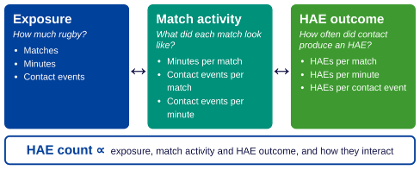
Figure 1. An HAE count is the product of exposure, match activity and the rate at which contacts produce head impacts.
To manage HAEs, we first need to understand how they occur. Broadly, a player has a high HAE count for two reasons. First, they play many matches and minutes, and so are involved in many contacts. This is “exposure”. Second, when they are in contact, their risk of an HAE is high. Each team receives two charts, like the illustrative example below, plotting players’ HAE counts over three weeks against minutes played and against contact involvements. These show which players sit above the league trend, and who has accumulated the most HAEs.
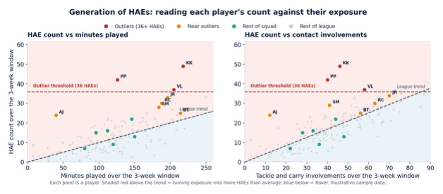
Figure 2. Each player’s HAE count read against the two exposure variables that drive it. Illustrative sample data.
How it works
Each week the data follows the same pipeline for every team in the competition. Instrumented mouthguard (IMG) data is taken from the Prevent platform, matched to the match timeline, and checked, with incomplete or implausible recordings removed. Where a player took the field without a valid record, their count is estimated by a model trained on more than 21,000 player-matches, so a missing mouthguard is never read as zero HAEs. Only moderate-band match HAEs are counted, summed over three consecutive weeks. An HAE Outlier is a player who exceeds 36 moderate HAEs in the men’s game or 23 in the women’s game, thresholds set two standard deviations above what a large dataset showed was typical in the elite game.
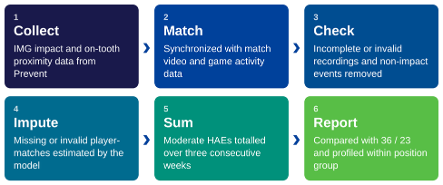
Figure 3. How the weekly outlier count is produced, applied identically to every team in the competition.
What we ask of teams
Very little that is new. When a player is identified as an HAE Outlier, their medical and performance staff review the case together, confirm the player is free of symptoms, and inform them, framed around exposure rather than harm. Any player with symptoms is managed through the standard Head Injury Assessment (HIA) protocol, as now. No intervention is mandated, no rest is required, and selection is unaffected. The first twelve months are, deliberately, an educational phase.
Why we are not prescribing the response
No governing body tells a team how many metres its wing should run on a Tuesday, and nor should it. A prescribed rule, such as sitting a player out after 36 HAEs, would be a blunt instrument, treating a player whose count comes from playing every minute exactly like one whose count comes from tackling in a poor position, when the solutions are entirely different. Our job is to provide the direction, the data and the support. The response belongs to the people who know the player.
We will share what teams learn as the season develops, and our science and medical team is available to talk through specific players at any time. We are grateful to the teams helping us get this right.
The community IMG study
We have written before about extending IMG technology into the community game, and I am pleased to report real progress. This study aims to understand how many head accelerations community players actually experience, from under-13s to adults, in the girls’, boys’, women’s and men’s game, around the world. From that we can define typical exposure at each age grade, set sensible thresholds, and support the players who fall above them, in the interests of their long-term brain health. World Rugby is providing custom-fitted IMGs to every participating player at no cost to their Union, with a dedicated project manager to support the work.
Data collection began this year, and more than 100,000 head acceleration events have already been captured. We expect to pass 270,000 by the time collection finishes in mid-2027, which will make this the largest community-game HAE dataset in the world by a significant margin.
None of this is possible without the Unions, and I want to thank them. Australia and South Africa were the first to complete their collection, delivering excellent data and outstanding collaboration, and New Zealand and Canada have now completed their cohorts too. To England, Scotland, the USA and France, who begin this month, and the Netherlands, entering a second season, thank you for committing to this research. Because taking part is voluntary, your engagement is everything.
Law change for welfare
Two types of tackle are now illegal and will be sanctioned as foul play: the hip drop tackle and the knee drop tackle. The hip drop has drawn growing concern because of the serious injury it can cause the ball carrier. The knee drop has become more common as teams have worked to bring contact lower in the elite game, raising fears of head injuries to tacklers and serious leg injuries to ball carriers. We identified this trend through our continuous tracking of how the tackle is evolving, and what that means for injury risk.
The hip drop is a good example of how we aim to support decision-makers, who are the game-specific experts, with evidence and data. In a hip drop, the tackler grips the ball carrier from the side or behind, swings round or through them, and drops their weight onto the carrier’s legs as they are brought to ground. Surveillance of more than 12,500 tackles across 50 men’s and women’s matches found a clear hip drop about twice every three matches, at a similar rate in both. It is rare, but its injury potential is high.
Our role was to provide data on prevalence, and then to work alongside coaches, players and match officials on the best response.
My thanks to Leeds Beckett University, and in particular Dr Matt Kitchin and Professor Ben Jones, who did much of the research and video analysis provided to the expert groups. Their expertise produced quality data very quickly.
Full detail of the change is available on the World Rugby Passport site, and a presentation with video examples, in English, French and Spanish, can be found here.
Recently published research
We are committed to basing our welfare decisions on the highest standard of evidence, which means doing the research and publishing it, in peer-reviewed journals and open access wherever we can. One such study has just been accepted, and it has direct implications for how HIA screens are run.
The paper, “Baseline symptom collection in elite rugby union players – limited clinical utility?”, is in press in the European Journal of Sport Science. Led by Dr James Brown, it examined symptom reporting in 5,879 men and women players, at pre-season baseline and during HIA screens. It found that the symptoms a player reports during an HIA are just as useful for diagnosis on their own as when compared against their baseline. The baseline comparison adds little, which is why the SCRM app no longer uses it in the HIA decision. Baseline screening still matters, though, as Dr Brown explains:
“We know from previous research that symptoms are often the best way to distinguish between concussed and not-concussed players. What this study shows is that concussion diagnosis is unaffected even if you don’t factor in the symptoms reported by a player during their baseline. However, that doesn’t mean that pre-season baseline symptom collection is irrelevant. We found that men and women often reported treatable chronic symptoms at baseline such as neck pain, disturbed sleep and fatigue”.
Players’ Voice
Contributed and owned by International Rugby Players.
Global Player Load Study: Phase 1 Complete and Phase 2 Underway
The IRPA, supported by World Rugby, has completed Phase 1 of the Global Player Load Study across six Super Rugby Pacific and Japan Rugby League One teams, with over 86% player engagement and full-season match, training, travel and injury data collected.
We are now working with teams and national unions to capture players’ exposure in other domestic competitions and international commitments, including the Nations Cup, Nations Championship and November tests.
Phase 2 is underway, with pre-season data and player interviews collected across ten teams in the Top 14, United Rugby Championship (Wales, Italy and South Africa) and Premiership Rugby, exploring players’ experience of physical, mental and life load.
What Players Are Telling Us
Initial interviews offer valuable insight into these demands. Physical load is generally seen as manageable when training is well structured, but players highlight mental fatigue, insufficient recovery and balancing rugby with life outside the game. As one player explained:
"Mentally is where I find it becomes a bit taxing. More than physically."
Another, on time away from the game:
"I haven’t really had a break. The off-season was just more rehab."
And on family life:
"Being away from the family — probably that’s the hardest thing at the moment."
Player load, then, extends well beyond the physical, with mental fatigue, recovery, contractual pressures and family commitments all shaping how players experience their season.
Expanding the Study into the Women's Elite Game
An important next step is expanding the study into the women's elite game, and we are identifying suitable competitions. This will help fill a significant evidence gap and lay the foundation for female-specific player load guidelines that reflect the demands and experiences of elite women players.
World Rugby Player Load Guidelines: Progress on Local Agreements
Since the Player Load Guidelines were endorsed in October 2025, agreements covering Premiership Rugby (England) and Ligue Nationale de Rugby (France) have been formally recognised and registered by World Rugby.
In South Africa, a new collective agreement between SA Rugby, MyPlayers and SAREO marks a significant milestone. IRPA is supporting MyPlayers to have it recognised and registered, and encourages other unions and competitions to follow suit, strengthening player welfare across the global game. Further information:
- World Rugby – Player Load Guidelines and Registration Process
- SA Rugby – Rugby Industry Agrees New Player Deal
Global Rugby Players Foundation (GRPF)
Founded by 12 of rugby’s most influential figures, the GRPF exists to ensure every former professional player has the support they need to thrive Beyond the Game. With global player associations and trusted partners, we empower former players with career transition support and resources for their mental and financial wellbeing, helping them keep confidence, purpose and connection after the game. With a growing global network and an ambitious vision, we aim to make support for former players a lasting part of rugby’s legacy.
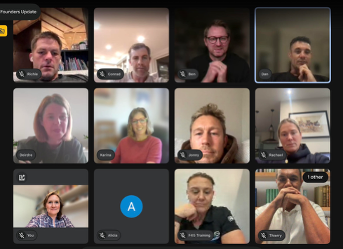
Picture: GRPF Founders Update Call, October 2026