



Figuratively speaking France’s tackle count in their epic RWC 2007 quarter-final win over New Zealand went through the Millennium Stadium roof.
Whereas Les Bleus’ come-from-behind win against the All Blacks in 1999 was all about French flair, it was the side’s gladiatorial qualities that came to the fore in the Cardiff cauldron that October night as New Zealand were beaten 20-18.
The French were like men possessed as they hurled themselves in front of wave after wave of All Black attacks, but there was a method to their madness, as Ellis testifies.
“We knew we could beat the All Blacks but we knew we had to defend in different ways,” Ellis told World Rugby TV.
"What we achieved against the All Blacks was phenomenal. The stats showed that half the team put in over 25 tackles each."
“We kept to our traditional defensive organisation in the first half when we predominantly leg tackled, but in the second half we used a two-man tackle to keep the ball carrier on his feet and prevent him from offloading - what is now widely known as the ‘choke tackle’.
“As a result they had to commit more players to the ruck which had the knock-on effect of reducing their attacking options. Thankfully it paid dividends.
“What we achieved against the All Blacks was phenomenal. The stats showed that half the team put in over 25 tackles each.”
Parking the bus
Escaping to Wales and the pressures associated with being the host nation had clearly done France a power of good.
“No-one gave us a chance against New Zealand and we said on arrival in Cardiff that whatever went wrong we’d take with a pinch of salt,” Ellis revealed.
“On the Monday morning of our first training session the bus broke down outside the hotel and we had to wait for another one to arrive. While we did that Freddie Michalak started up a game of touch and pass in the hotel car park. The players were stress-free whereas the pressure placed on us by the public and ourselves while we were in France was greater than it needed to be.
“Bernard Laporte was leaving after the World Cup to be Minister of Sport, so we always had lots of politicians around the team. Nicolas Sarkozy got involved by talking about what we needed to do to motivate the players and I think he over-stepped the mark.
“If the players had just been allowed to enjoy the competition like they’d done in 2003 it would have been much better. Initially we just saw inside the training camp at Marcoussis and then, when we had to leave, we were isolated on the top floor of hotels and only got to see the public when we went training.”
Pain in the rain
France’s victory against the All Blacks set up a semi-final against England for the second tournament running. Unfortunately for Les Bleus both ended in defeat.
“If it hadn’t have rained in 2003 it would have probably been a different score,” Ellis reasoned.
“We’d trained all week in glorious sunshine but it started to rain on the morning of the match and it just got heavier and heavier as the day wore on.
“Phil Vickery and Trevor Woodman, who I coached at Gloucester at the time, have admitted to me since that as soon as the heavens opened their hopes were raised.
“It was ironic because wherever we’d been in Australia up until that point it had been lovely weather and we’d scored a lot of points.”
There was similar heartache in 2007, too, as England had a battered and bruised France reeling on the ropes early on and never looked back.
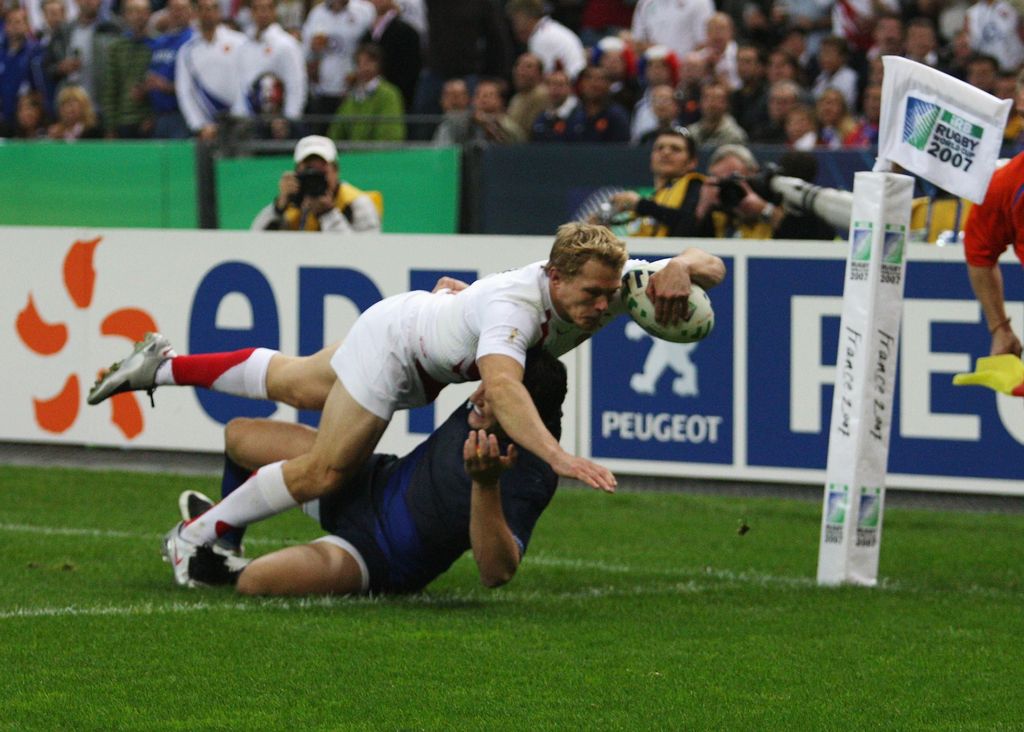
“We needed to change the team to freshen people up after the New Zealand game but we didn’t do that and England got off to a flying start with Josh Lewsey scoring in the corner (pictured) after the ball bounced up in front of Damian Traille,” Ellis said.
“England caused us different problems to the All Blacks and I think if we’d have had a genuine full-back playing that day then the try wouldn’t have been scored.
“But they did and then Jonny Wilkinson did what he’d been doing for years by kicking his goals and keeping the scoreboard moving while we let opportunities get away from us.”
In the final part of the two-part series, Dave Ellis talks about the rollercoaster ride France endured in getting to the RWC 2011 final and his involvement with Tonga ahead of this year’s tournament.
