



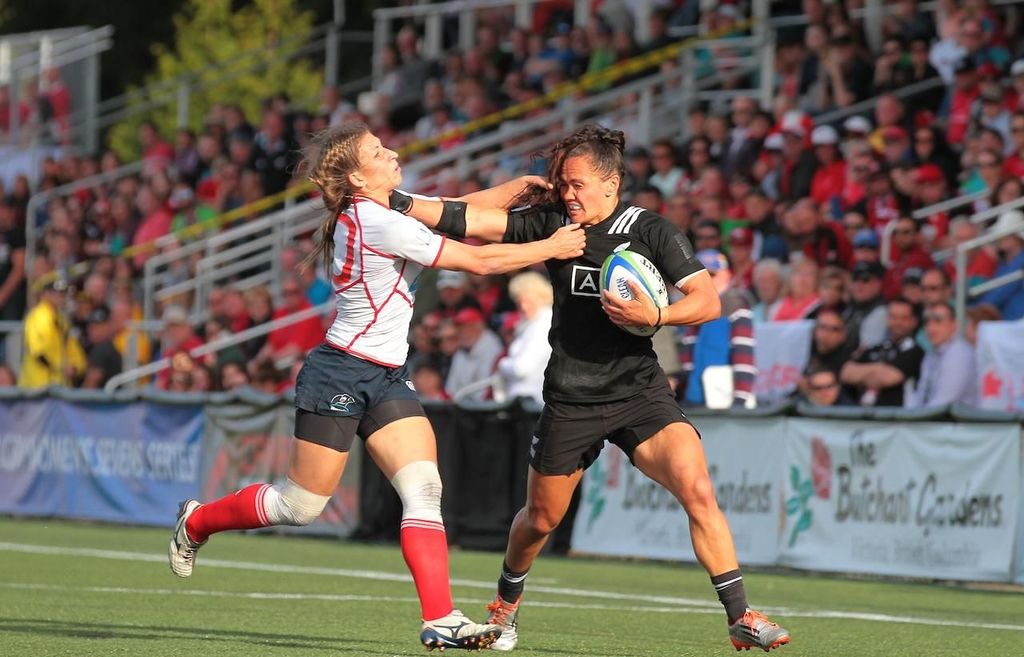
The penultimate round of the World Rugby Women’s Sevens Series kicks off at the Twickenham Stoop in London on Friday with the race for Olympic qualification still very much up in the air.
New Zealand will confirm their place at Rio 2016 by reaching the Cup quarter-finals in London, while with a 22-point cushion in the standings a third successive Women's Sevens Series title is also within touching distance.
The six teams below them – Canada, Australia, France, USA, England and Russia – are separated by just 12 points with three set to celebrate and the others forced to turn their attentions to trying to qualify through the regional tournaments or global repechage.
We decided to delve into game analysis to see why New Zealand are in contention to complete the perfect season, why Australia slipped in Atlanta and Langford and what stands those in the race for qualification apart from the bottom five teams.
WHY DO NEW ZEALAND WIN MORE?
- The significant difference between New Zealand and the rest of the teams is their defence. They make it very difficult for teams to gain territory and score tries
- An average of 15.2 defensive tackle/rucks completed per match and they complete a tackle every 20 seconds of the opposition’s possession
- They have allowed their opposition an average of only 2.5 entries into their 22 per match, successfully denying a try in 35 per cent of those entries
- Of the tries they do concede, only 50 per cent are conceded with less than three passes in the build-up to the try, highlighting that New Zealand’s opposition have to distribute the ball significantly more than average to score
WHY ARE AUSTRALIA NOW WINNING LESS?
- Australia are finding it progressively harder to score tries. Their try build-up percentages have decreased steadily from Dubai to Langford, meaning that of the tries that they do score, progressively less are scored with a minimum of tackle/rucks and passes in the build-up. This suggests that Australia have had an increase in game-related workload in the last two tournaments compared to the start of the series.
- Adding to this, Australia have allowed the opposition into their own 22 progressively more in the last two tournaments compared to start of the series - from an average of 1.5 entries per match in Dubai to an average of three in Langford.
TOP SEVEN V BOTTOM FIVE
The significant statistical differences between the top seven teams competing for Olympic qualification and the bottom five teams in the series rankings are:
- Territory - The top seven are markedly better at gaining territory in phase-play and restricting entry into their own 22
- Maintain possession - The bottom five teams consistently concede possession to their opposition. The bottom five have a turnover difference of -7.3 compared to the top seven's 5.2 difference.
- Discipline - At the breakdown discipline is a key element to a successful performance in sevens. The bottom five teams concede an average of three tackle/ruck penalties per match against the top seven's two tackle/ruck penalties per match.
Click here to see where you can watch the London Sevens this weekend from around the world or follow the Women's Sevens World Series on Twitter @WorldRugby7s

