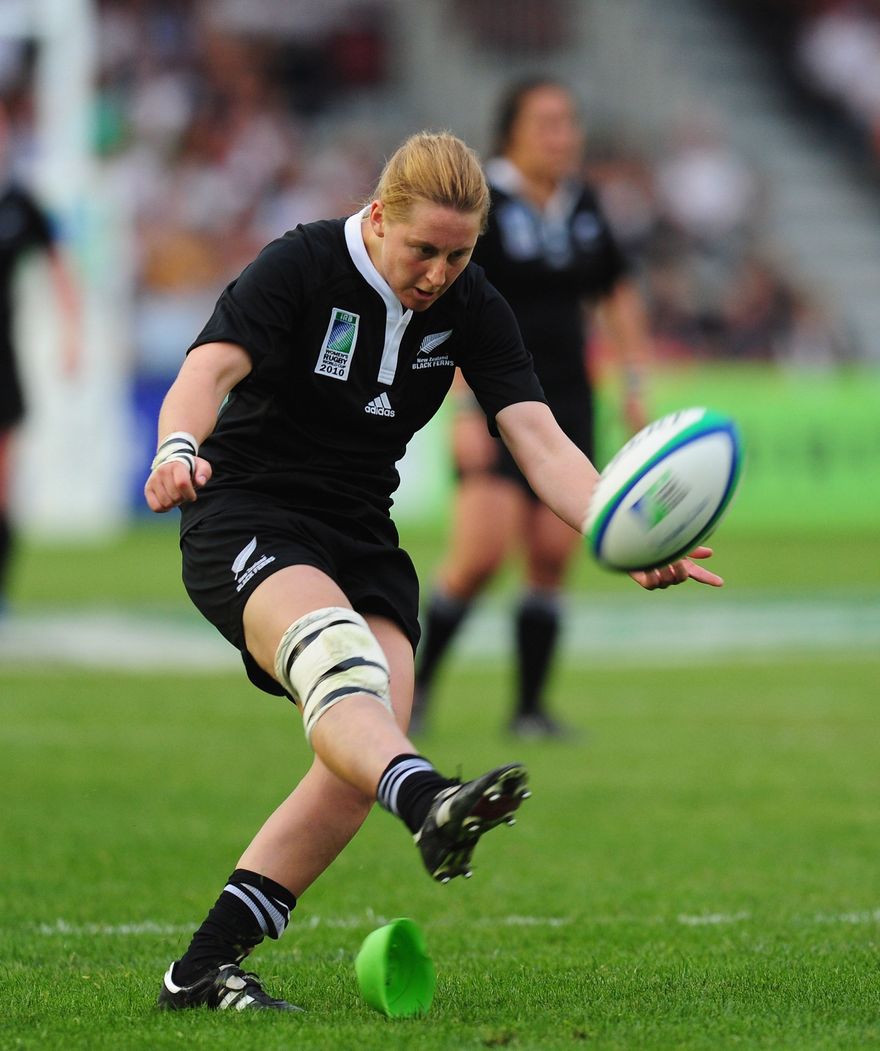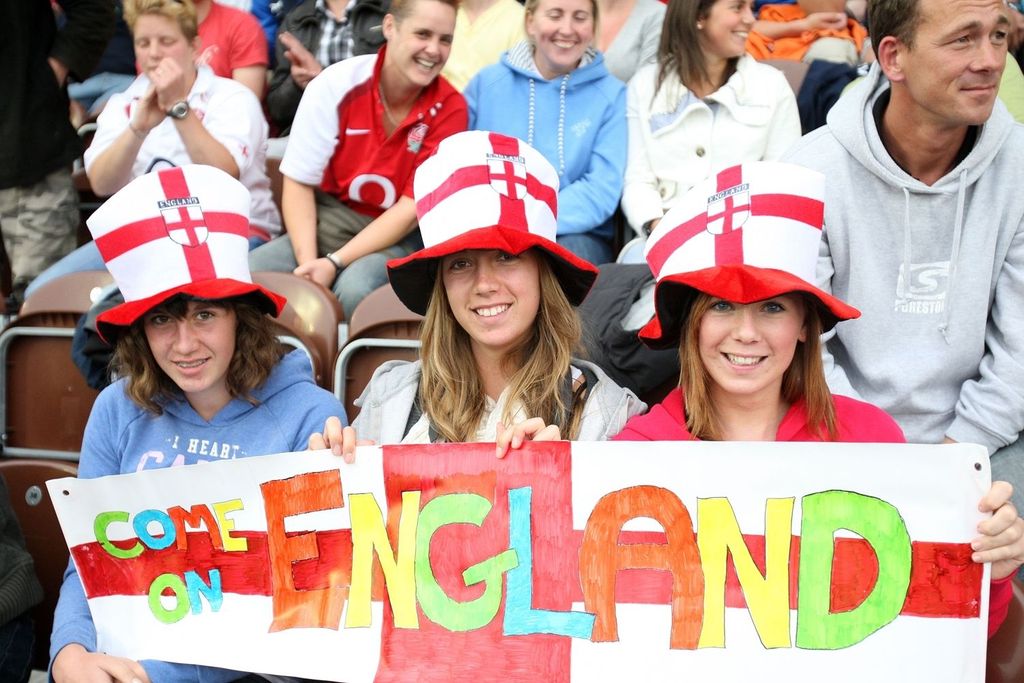
With the dust now settled on the most successful Women's
Rugby World Cup to date, Total Rugby Radio caught up with IRB
Women's Development Manager Susan Carty to get her thoughts on
the tournament and the future for the Women's Game.
LISTEN TO SUSAN CARTY ON TOTAL RUGBY RADIO
>>
TOTAL RUGBY: What has been the reaction to the Women's
Rugby World Cup?
SUSAN CARTY: Well with just over a week to reflect
since the final, we can look back on three weeks of Women's
Rugby and say that the tournament was indeed very successful as we
had hoped. From the figures we have received so far, we have had
record breaking broadcasting and media exposure which is fantastic.
The attendances during the five days of matches was absolutely
fantastic with three days in Surrey Sports Park for the pool
matches all sold out and a fabulous crowd at the final to see what
was a fantastic final.
From the point of view of the rugby that was on display, I
think we can say that performance levels have certainly increased
over the last few years and we saw some really good quality rugby,
great skill levels, fabulous intensity, the tackling, the skill
level on display was really, really exciting indeed and I think it
has been a landmark time in the overall development of Women's
Rugby.
TR: What has the reaction been from the wider rugby community and the media?
SC: That has probably been one of the most
exciting things about the whole thing, people on the street are
very much aware of what has been going on, once they hear about
Women's Rugby World Cup they are eager to tell you what they
think. There is obvious excitement and enthusiasm, there was a lot
of delight around the number of matches shown live on TV, the
coverage in newspapers, it certainly seemed to grab the enthusiasm
and imagination of the general public which has been fantastic for
us to hear.
What we are getting now is when is the next World Cup, where
is it going to be held, what is going on? It is really just very
positive looking forward and I think the public are, to be honest,
a lot more knowledgeable about this World Cup and that is probably
on the back of the exposure this has received.
TR: To what extent does the hard work start now?
SC: Oh it always feels like the real hard work
starts the day after the World Cup final finished. We can't get
carried away in what we have achieved and I think we have achieved
a lot. It has been a fantastic tournament, it will certainly help
us progress all of our strategic goals for Women's Rugby.
Equally we have to be realistic and realise we have a lot of
work to do. We have to bring the game to a lot more people; we need
to make it accessible to a lot more girls, a lot more women around
the world in our Member Unions and beyond. We have a lot of work to
do, but it is great to get such a base and such key time where the
focus has been on Women's Rugby and I think that will really
help us accelerate the development of the Women's Game.
TR: The overall standard has increased, but the top two
still seem to be out there on their own - how do you change
that?
SC: First of all the standard certainly has gone
up and I think that has come from rugby pundits around the world
that have spent years analysing the game overall and certainly the
feedback from all directions is that it has been a very exciting
time for rugby, that the rugby on display has been of a very high
quality and a very high standard, so that is very exciting to hear
and I think it is absolutely true.
In relation to the performance gap that has been talked about
that is there, I think it is not just the top two that are out on
their own, if we look at some of the fixtures throughout the World
Cup and you look at when Wales played Australia, that game was
closely fought, equally Sweden played France and that game was
quite tight even though Sweden finished overall 12th and France
finished fourth, it was a hard fought game.
When you look at performances and scorelines throughout the
World Cup itself, the gap isn't just a case that it was two
countries out on their own and they can't be touched. I think
we can certainly debate that one. But equally it is important to
acknowledge that we have a lot of work to do, that all 12 are not
on an equal performance level and the countries around the world we
can certainly learn from those that have made great strides.
We can take a lot from what England have done to develop
Women's Rugby in their country, we can take a lot from the
performances that New Zealand brought to the World Cup and I think
we can share best practice across our Unions which is part of the
work that needs to be done. We can and we absolutely will build on
the performance levels that have already been reached within the
Women's Game, it is one of the strategic goals within the
Women's Strategic Plan that we will just continue to build
on.
TR: Apart from another England-New Zealand final, what are the biggest challenges facing the Women's Game?
SC: I don't particularly think that the
challenges that face the Women's Game have changed as such, I
think we have had a lot of positives in the last 12 months that
will really help us drive the development of the Women's Game.
The Olympic decision will certainly add impetus to the growth of
the Game.
Sevens will help make the playing of the game more accessible
to many people where it is not a strong tradition and having a
tournament where the focus has been only on women playing the game
over a three-week period and the exposure that has received, all of
that will really help us drive the development of the women's
game overall so there are a lot of positives to build on.
Equally we are very conscious that rugby is known as a male
dominated sport and it is bringing women into the game in all areas
and at all levels within the game, and that continues to be our
focus. In some areas of the world it is still not a tradition, it
is still not particularly well known, so it is making it visible,
making it tangible for people and showing them that women can play
the game and they can play it particularly well and really it is
for those in rugby that haven't already realised that women
have a lot to bring to the game.
It is really around education and awareness and building on
the successes that we have achieved over the past 12 months and I
think we will take the women's game far in another short space
of time.
TR: What do you hope to see in four years time at
Women's Rugby World Cup 2014?
SC: Wow, Women's Rugby World Cup 2014. To be
honest, I can only answer that with a smile and say if you look
back since 2006 and look at what we have achieved in the space of
four years and if we achieve and build on that again over the next
four I think we will be very proud of where the Women's Game
will be in 2014.
I think in four years time, we will be looking back on
another very successful tournament, where again we will be very
excited around the progress that we will have made with the
performances on the pitch, but equally we need to build on the
exposure and the visibility of women playing the game and I think
we will have achieved that in 2014.
We are currently reviewing the Women's Strategic Plan,
which incidentally was launched in 2006, and I think we can really
add impetus to the growth of the Women's Game and set ourselves
some really challenging goals over the next four years so that we
add to the growth, we add to the development, we will have more
girls playing the game, we will have more countries on board and
that the performance end of the game becomes less of a debate to be
honest, so we will have more girls playing the game at a higher
level all over the world.
TR: Do you think that by 2014 or in five years or so time we will have a professional women's player?
SC: I would say if we get to five years time and
we have professional women's rugby players out there I think
great and fantastic and bring it on and we could only be excited by
a prospect like that.
Equally I think we need to be realistic about our goals, for
me it is making the game accessible, it is building on numbers,
making sure that girls have the option to play the game regardless
of where they are around the world.
Then in the next five to six years we are looking towards the
Olympics, 2016 will be the first time that women will be on stage
in the Olympics showcasing Women's Sevens, that needs to be
successful for us and I think it absolutely will be.
They are the priorities for us at the minute and I think over
time the professionalism of women playing the game will become more
and more of a question, but I think if we keep our feet on the
ground and if we drive the development, participation and
competitions I think other things like this will look after
themselves to be honest.
LISTEN TO SUSAN CARTY ON TOTAL RUGBY RADIO
>>