


As an exciting new decade of international Sevens gets set to kick off in Wellington, we assess the sport's position and prospects as a new member of the Olympic family.
Where does the Game of Rugby stand? It seems a fitting question at the dawn of a new decade. One that applies to the 15-a-side Game and evermore so to the Olympic sport of Sevens.
Last week on
Total Rugby Radio, the great Gareth Edwards spoke passionately about the Game in the 70s - the dashing counter-attacking play of Gerald Davies, JJ and JPR Williams for Wales and the Lions - and pondered whether he'd like to be playing today. He has 'huge respect' for the game's modern day giants and was himself a physical player, but would he be marked out of things now, he wondered?
Simon Mannix, the former All Black and erudite pundit now coaching top flight rugby in France, referred to a 'crossroads' in the Game and the likes of former Ireland full back Conor O'Shea and
Rugby World Editor Paul Morgan said nothing to violently contradict. Rugby at the top table has enjoyed a superb first 15 years of professionalism, all agreed. So how is the next 15 shaping up?
In the Sevens game too, the 10 years between 2010 and 2020 will be massive. This year there is the Commonwealth Games in Delhi, 2013 brings a Rugby World Cup Sevens, 2014 another Commonwealth Games in Scotland, 2016 a first ever Olympic Games in Rio, 2018 a Commonwealth Games, 2020 a second Olympics. And all the while, the second decade of the established IRB Sevens World Series.
The Olympic 'Yes' has brought many questions. How will national funding work? How will the influx of 'cross-over' athletes from other sports work? How will qualifying work for the Games in Rio? Will the World Series expand?
Others are more tangible and immediate, and might just be hinted at over the coming weekend in Wellington.
Firstly, can Sevens take rugby global? While Rugby is a major sport, the IRB currently has less than 120 full Member Unions, while 205 form the Olympic family, so the numbers point that way.
Quite apart from the more celebrated cases - obviously Fiji and then Kenya, Samoa, USA, Portugal - the competitive edge of the three qualifying nations here in Wellington - Tonga, Niue and Papua New Guinea - guarantees sting to all 44 matches. Can Tonga fulfil their undoubted potential? They reached the Cup semis two years ago. Will Serevi's PNG raise the heart rate? They scored first against England last year. Will Niue slay a giant? Samoa came up short against them last year..
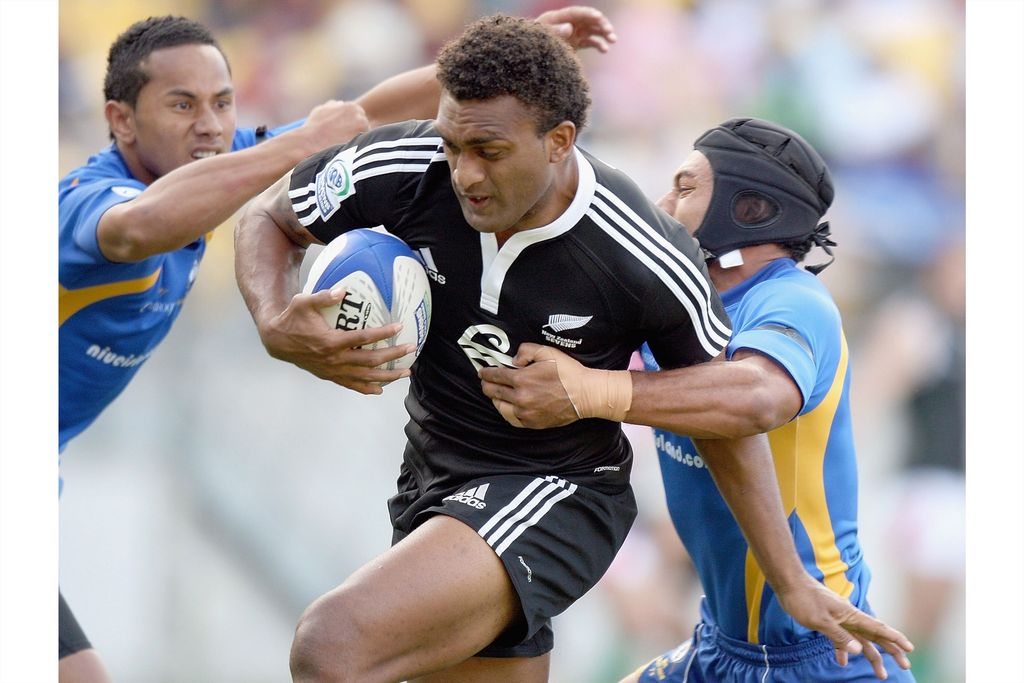
It's fitting, too, that the first Sevens tournament of this bold new decade should be held in New Zealand. No other nation has done more to raise playing standards in the shorter game over the years than the hosts here, and timeless coach Gordon Tietjens should take a lion's share of the credit for that. When Wellington hosts the 11th NZI Sevens this Friday and Saturday, Tiejtens' team will be hoping to win back the title they relinquished in the dying seconds of the final last year against England, and further propel themselves towards a ninth World Series crown. Nine. Out of 11.
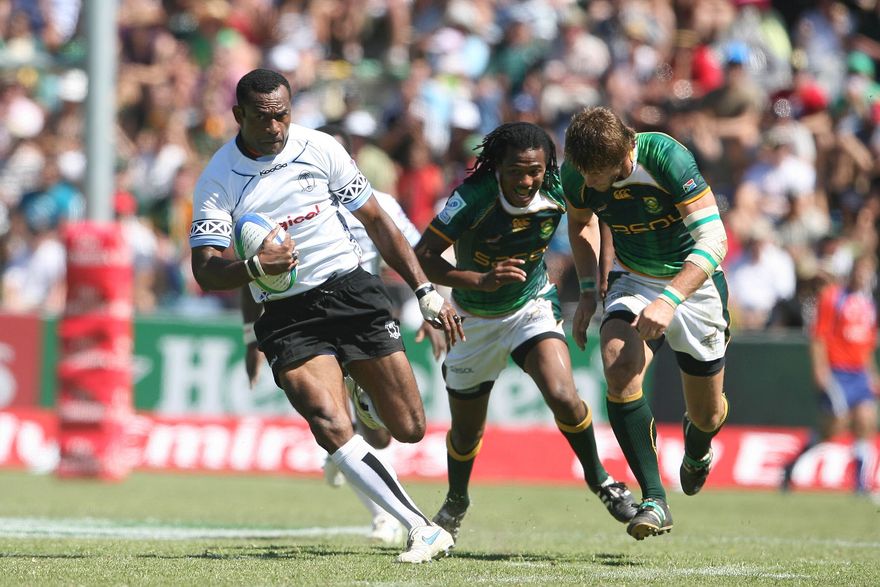
And yet even Tietjens accepts that there is a turning of the tide on the pitch, which signals the start of a new 'Olympic' era for the sport. New Zealand no longer have it all their own way. South Africa were superb last season in becoming the third nation to clinch the World Series and there are now as many as eight teams capable of winning these Cup titles, and many more in with a shout of causing a couple of upsets on day one and making the last eight.
Ironically, the 'upset' in Sevens is an increasingly predictable occurrence, which gives the Game worldwide appeal. Success is accessible. The Chinas, Russias, USAs and Indias all have sports ministers eying a quick return on their National Olympic Committee budgets and Sevens is a new budget line.
Thrill-seekers
Another key question is whether Sevens can work commercially and bring the IOC the younger fanbase it craves. Anyone who tunes in to this weekend's two-day rugby party at the Westpac will see that it can, and will. 35,000 seats all taken, sold out online in minutes with demand outstripping supply by over 70,000; every fan in fancy dress, enjoying the rugby but also there to consume the whole four-day, sponsor-fuelled experience. Music to the IOC's ears.
And the party is not, of course, limited to rugby-obsessed New Zealand. Hong Kong and Dubai are world class events and next week's World Series debut in Las Vegas will have fans and other sports taking serious note. Already this year we've had the advent of the Dubai Football 7s. It doesn't have quite the same ring, but you can't blame them for trying.
Finally, can Sevens excite as a sport? That, more than anything, is beyond question. Whether in the men's or the women's game, Sevens offers a global panacea to the issues most pressing in 15s.
Yes, it's subject to the same complexity at the breakdown and tackle areas, but the game's speed and dynamism means that it never gets truly bogged down; coaches have been known to fine players for kicking; there is more confrontation and physicality now than ever but the acres of space mean that pace, skill and endeavour still prevail. Good defence still wins matches and tournaments, but it does not dominate.
And if there is the odd match that fails to ignite, no worry - another starts in a few minutes. It all presents a compelling case.
This week on IRBSevens.com we countdown to the NZI Sevens with columns, audio and video featuring the biggest names in Sevens - some looking ahead to mouthwatering pool clashes on day one.
South Africa's World Series winning coach Paul Treu looks to New Zealand for inspiration but at the same time prepares to take them on at the end of the first day. Fiji's great Waisale Serevi looks ahead to a match against his former teammates as coach of Papua New Guinea and England coach Ben Ryan shares his views as defending champion coach.
Remember, you can also watch highlights of last year's tournament at
www.youtube.com/irb