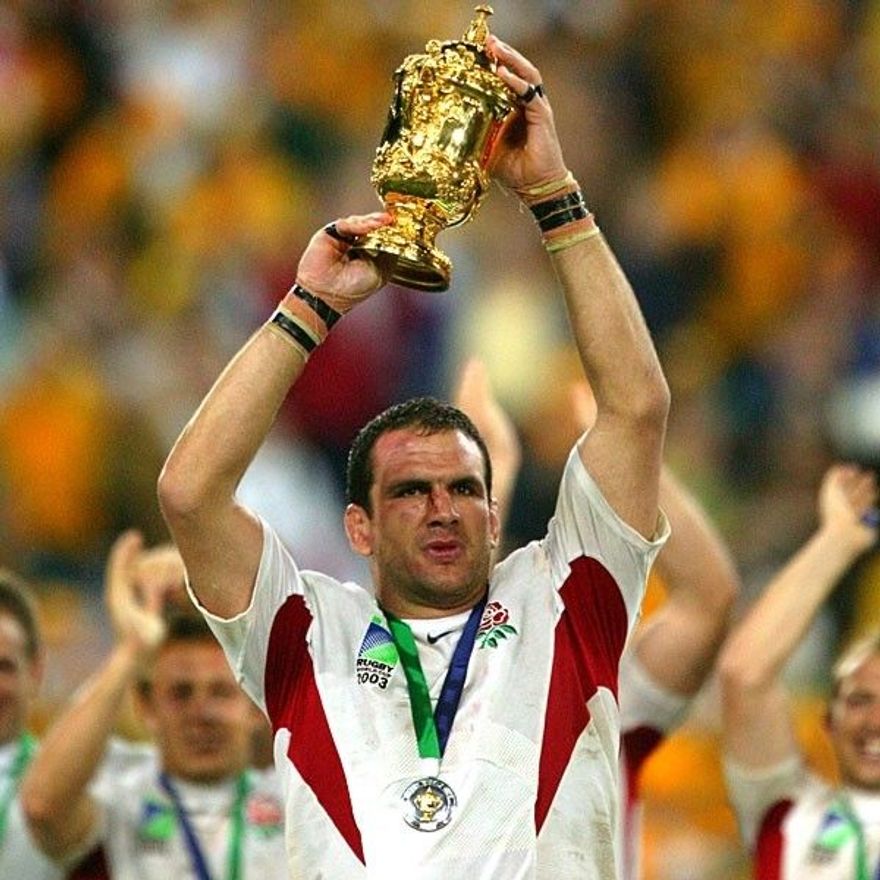



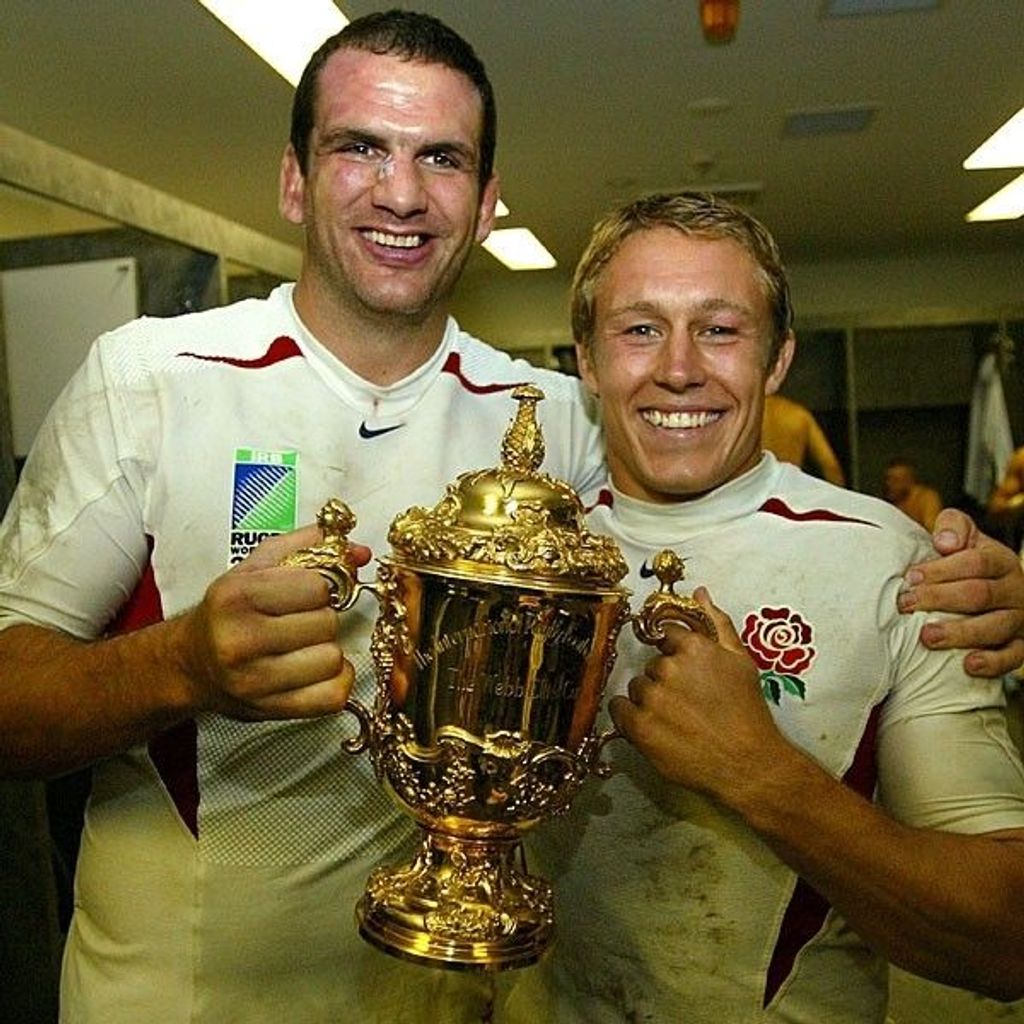
There are only five of them in the world, a very select group who were supreme leaders both on and off the rugby pitch with the ability to motivate and inspire everyone around them in the quest for glory.
They are, of course, Rugby World Cup winning captains with Martin Johnson, arguably England’s greatest ever leader, following in the footsteps of New Zealand’s David Kirk, Australians Nick Farr-Jones and John Eales and South Africa’s Francois Pienaar.
Johnson, who had already enjoyed a series victory with the British & Irish Lions as the only man to captain them on two tours, was held in awe by his opponents, teammates and coaches, including then England coach Sir Clive Woodward.
“Martin Johnson was the key to that England team and just set fantastic examples and all of us, players and coaches alike, were just lucky enough to have been around when he played,” Woodward told Total Rugby.
England under Woodward and Johnson had gone into Rugby World Cup 2003 as joint favourites with New Zealand, having won the Six Nations Grand Slam and beaten both Australia and the All Blacks in the southern hemisphere earlier that summer.
“There was huge expectation on the whole side and we all felt that pressure, because that’s what it’s about,” Johnson explained of a tournament which would end with him becoming the first northern hemisphere captain to lift the Webb Ellis Cup.
However it certainly wasn’t all plain sailing for Johnson’s England in the Pool stages, as the towering second row recalls their passage through Rugby World Cup 2003 that took them across Australia from Perth to Melbourne to Brisbane to Sydney.
“We had the South Africa game, which was huge pressure because to win would mean you won the group and got a better quarter final draw. To lose would mean you probably played the All Blacks in the quarter final,” remembers Johnson.
“With 15 or 20 minutes to go we scored the try that made the difference and then really got on top of them, and then Jonny [Wilkinson] dropped a couple of goals and we moved away from South Africa.
“You could see the wind go out of their sails and you knew we had won it.”
England scored nearly 200 points in overcoming Georgia and Uruguay in their first and last matches in Pool C, but it was the their penultimate match against Samoa in Melbourne that proved a real test for Johnson’s men.
“I think it grounded us. We came out of that game a little upset with ourselves in the way we’d played, for the way we had let them dominate us for the first 20 – 25 minutes and getting criticised from all quarters for the way we had played, it really set us up for the rest of the tournament,” admitted Johnson, whose side eventually triumphed 35-22.
They had negotiated the first hurdle by finishing top of the Pool, securing a quarter final against old rivals Wales in Brisbane, where once more England found themselves heading for the World Cup exit door after early tries by Colin Charvis and Stephen Jones.
“We got to the quarter final, again didn’t play well for 40 minutes and Wales were probably a better team than we had given them credit for. Suddenly we were down 10-3 at half time in a World Cup quarter final and again, staring down a barrel of what would have been the most horrible defeat in your life.”
A few words from Johnson at half time and a change of pace from Jason Robinson early in the second half proved decisive for England to help them become the first team to come from behind to win a World Cup quarter final – 28-17.
“Jason instantly in the second half made a break and put Will [Greenwood] in the corner. Jonny kicked it and it’s amazing – 10-3 sounds like we’re behind but suddenly it’s 10-all and everything Wales has done is over and we’ve started again.”
Wales may have been conquered, but that merely pitted Johnson and co against France, the form team of the tournament and, like England, a side with their sights set on a first World Cup success having suffered final heartbreak once or twice before.
“After being the number one team in the world and the favourites, by the semi finals we were definitely the underdogs and the French boys had something to say, a few of their players and coaches chipped in. They were obviously pretty confident about what they were going to do. It was great for us, we went out there with real determination.”
England duly produced their best performance of the tournament to that point in the wet and difficult conditions in Sydney, all thanks to a huge effort by Johnson and his fellow forwards … and the trusty boot of Jonny Wilkinson.
“Our front row was getting the slight edge in the scrum, our maul was working, our guys were driving the ball up and as the game wore on, as we played these tactics, we really got on top of them,” recalled Johnson.
“Jonny dropped a goal here and there, we kicked our penalties and every time we did that it was just another nail in their coffin and you could feel them go and deflate and deflate.”
So to the World Cup final against the host nation, an intense encounter that went right down the final seconds of extra time, its dramatic conclusion ensuring it will always remain part of the tournament’s proud history.
Wilkinson’s boot may have proved the match winner, but for him and now retired centre Will Greenwood, England wouldn’t have been in that position had it not been for their inspirational captain.
“I feel honoured and privileged to have played under Martin Johnson – and I will always be in my own mind simply a foot soldier in his team. That’s who we were, he was the talisman,” Greenwood told Total Rugby.
Wilkinson echoed the sentiment, saying: “When he walked around you could tell it had an effect on his people – to make them feel bigger and shoulders back – and you could tell it had the opposite effect on others, opposition players.
“Their shoulders go forward and their heads came down. It was just something about him, the way he spoke and the way he was … I don’t know, maybe they don’t come around very often.”
Few England fans would disagree with their hero of the hour on 22 November 2003.