



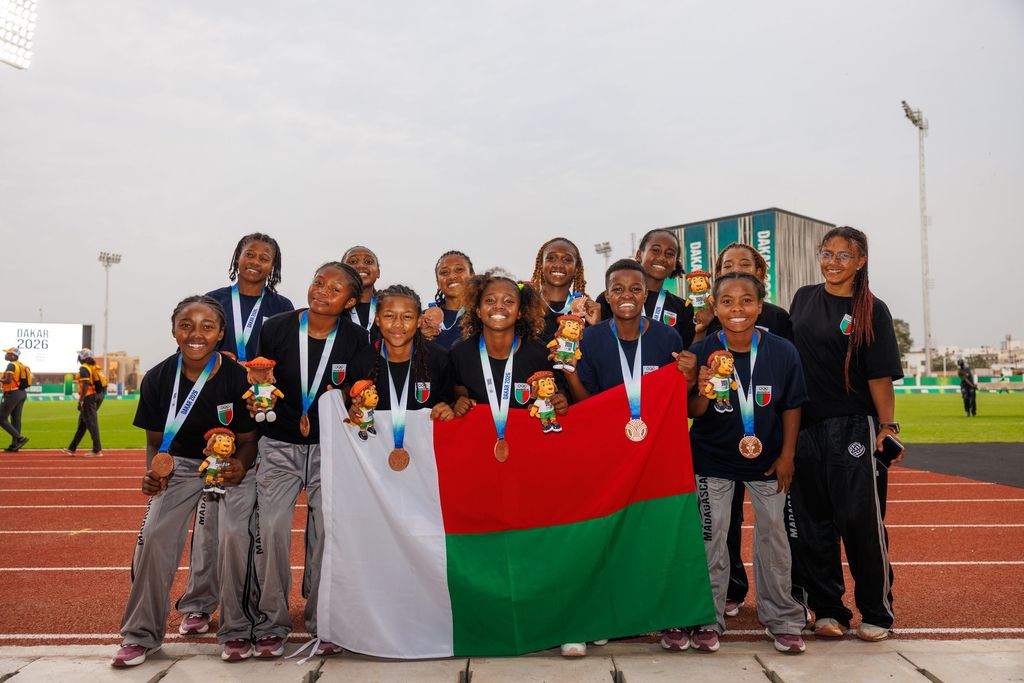
The first Olympic sporting event to be held on African soil provided a memorable stage for rugby sevens, with developing rugby nations making their mark and young athletes showcasing the growing strength of the game across the continent.
Among the standout achievements were Kenya's historic gold medal in the women's competition and Madagascar's bronze, with both teams having participated in an Olympic Solidarity-supported training camp in Tunisia just weeks before stepping onto the podium in Dakar.
Organised by World Rugby in October in collaboration with the International Olympic Committee, the camp provided an important opportunity for both teams to fine-tune their preparations ahead of the Youth Olympic Games, combining on-field training with educational sessions covering anti-doping, safeguarding and the Olympic values.
The initiative reflected the wider objectives of Olympic Solidarity, which supports athletes and National Olympic Committees around the world, helping to strengthen sporting development and create opportunities for young athletes to compete on the international stage.
For Kenya and Madagascar, that support formed part of a journey that culminated in unforgettable moments in Dakar. Kenya's Rising Lionesses claimed gold in dramatic fashion, defeating Australia 17-12 in extra time, with Mitchelle Chemtai scoring the decisive try to secure the country's first Olympic rugby sevens gold medal. The victory also marked the first time an African nation had won rugby sevens gold at either the Olympic Games or Youth Olympic Games.
Madagascar, meanwhile, celebrated a milestone of its own, defeating Czechia 26-10 to secure bronze and claim the nation's first-ever Olympic medal in any sport.
Reflecting on Kenya's achievement, Kenya Rugby Union CEO Thomas Odundo highlighted the importance of the support received throughout the team's development. “I'm very proud of the girls. What started as developing the national sports system was then followed by this training camp and finally materialised into a medal. That's just amazing.”
The success of both teams underlined the importance of sustained investment in emerging rugby nations, with initiatives such as the Olympic Solidarity-supported camp helping to provide young athletes with the preparation, knowledge and experience needed to perform at the highest level.
World Rugby CEO Alan Gilpin, who attended the Games in Dakar, witnessed the historic achievements and the enthusiasm surrounding rugby sevens at Africa's first Youth Olympic Games. “Dakar 2026 was a special moment for rugby and for the growth of the game in Africa. Seeing Kenya and Madagascar make history on the Olympic stage was incredibly inspiring and demonstrated the talent and potential that exists across the continent.
“Through our collaboration with Olympic Solidarity, we can help provide young players and emerging rugby nations with opportunities to develop, prepare and compete. The achievements in Dakar are a wonderful example of what that support can help make possible, and we look forward to building on this momentum.”
The rugby sevens competition produced memorable performances across both tournaments, with France securing men's gold ahead of South Africa and Argentina, while Kenya topped the women's podium ahead of Australia and Madagascar.
Beyond the medals, Dakar 2026 demonstrated the opportunities that rugby sevens can create for young athletes around the world, and the important role that collaboration and targeted development initiatives can play in helping more countries realise their potential on the Olympic stage.
