


This time last year the French women’s sevens team didn’t have the 2016 Olympic Games on their radar. If they did, they certainly weren’t telling anyone about it.
Sitting outside the core teams on the World Rugby Women's Sevens Series, they featured at just a handful of events, and didn't exactly set the world alight.
However things changed in the latter half of 2014. Les Bleues arrived in Hong Kong for a qualifier to achieve core status on the series and promptly secured that goal. They’ve since been the one of the stand-out teams on the 2014-15 series and currently sit in fourth place in the standings – they will qualify directly for Rio 2016 if things remain the way they are.
So what’s behind the turnaround? Where have the improvements come from? Perhaps the French were bolstered by hosting Women’s Rugby World Cup 2014 in Paris last August?
“This year has been better than previous years, that’s for sure,” said French captain Fanny Horta, speaking as her side prepared for the fourth round of the World Rugby Women’s Sevens Series in Langford, British Columbia, Canada.
“Since the Women’s Rugby World Cup last year, the women’s game has changed. Obviously it brought a lot more supporters and we really saw more and more numbers coming out to support us all around France, and it was really positive."
The French women's team train in the afternoon sun ahead of the #Canada7s - can they remain in fourth place? pic.twitter.com/YpoWbM97bS
— World Rugby Sevens (@WorldRugby7s)
April 17, 2015
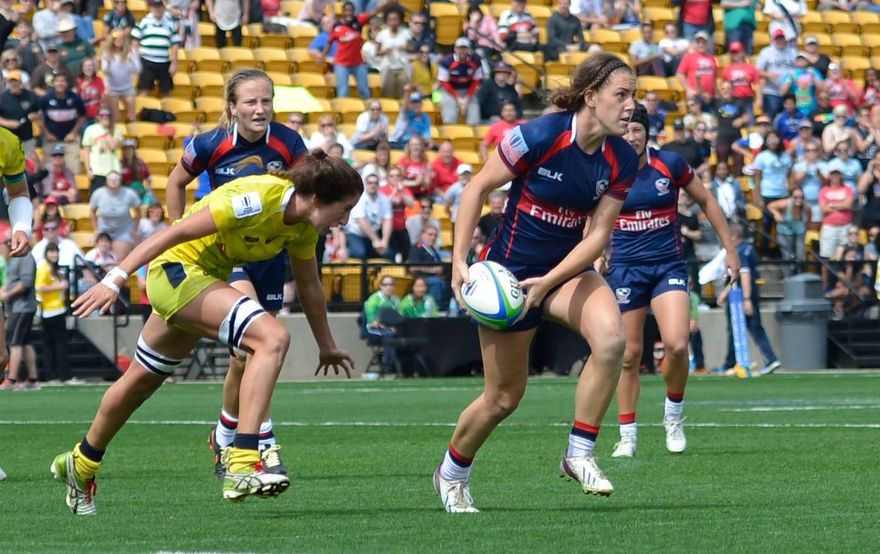
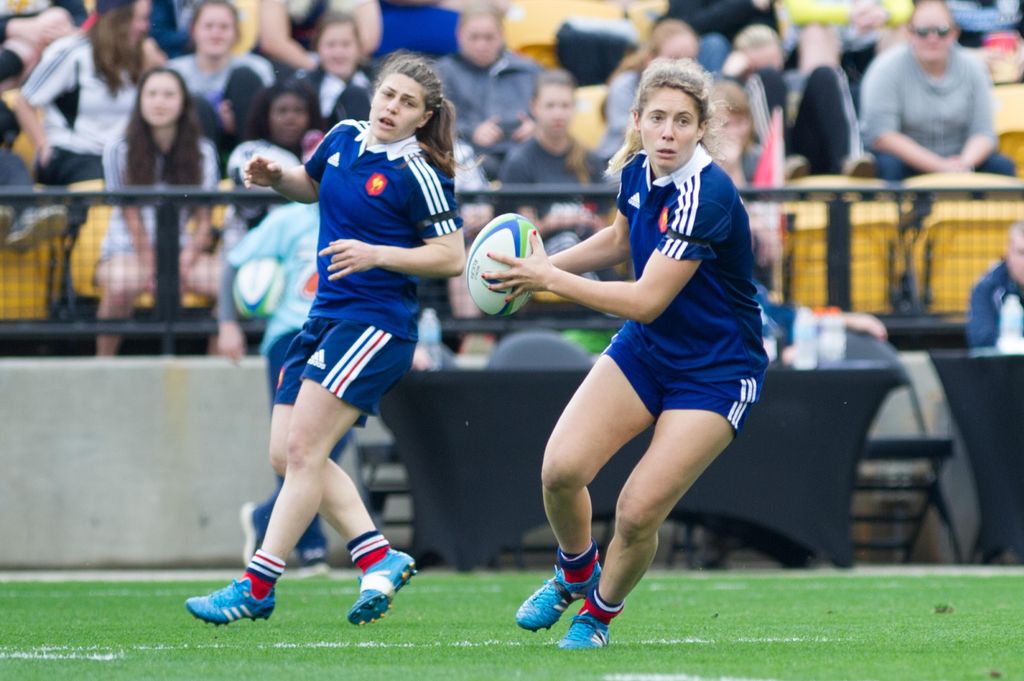
The change in fortunes has been noticeable. France are a more focused team, tighter in defence and a threat in attack. Caroline Ladagnous has contributed 60 points this season, with Shannon Izar on eight tries, to date. Players like Marjorie Mayans (pictured above) and former captain Christelle le Duff have contributed to the defensive effort since the season kicked off at the end of 2014.
Horta admits that this season has seen the team dynamic working to great effect, and the training that the girls have been doing at the FFR Centre of Excellence in Marcoussis is bearing fruit. Dumping England out of the quarter-finals at the first round of the series in Dubai was quite a statement, and they haven't looked back since.
“This has been a far more positive year, and with the possibility of (Olympic) qualification it's been rather good for us,” said Horta.
The challenge now is to stay in the coveted fourth position.
“Yes, it's very difficult because it's not a very comfortable position to be in, in the sense that there are a lot of other countries that want to take our place. Fourth is a very tight spot and one which is sought after, and we have to hold out,” she added.
Coach David Courteix has been a busy man in the last year. With the team based at the FFR Centre of Excellence, he’s had more access to the sevens teams than before, but says that there are still challenges to overcome.
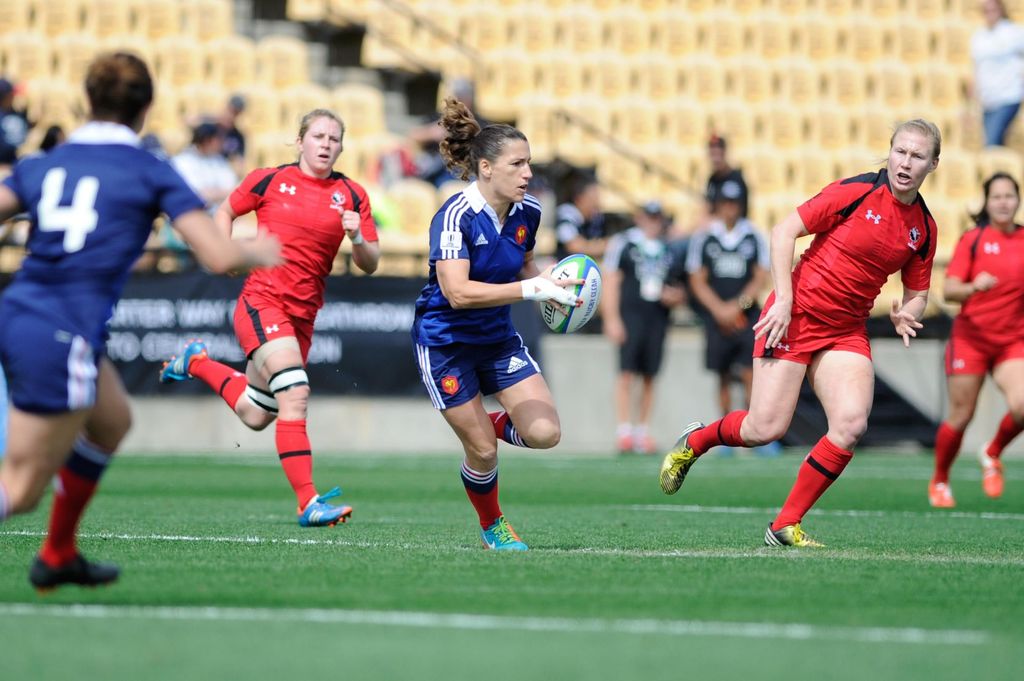
“It's our first season to compete in the full series and it's been very enriching season for us and very good for our development. It's the first year we can really develop our potential - the girls were doing a lot less sevens training before this year in France, so yeah, it's been a demanding season, but one where I 've been happy with the results and they've been encouraging for the team."
Courteix admits that the game in France has changed rapidly in the last year since the Women’s Rugby World Cup, but if the structures are right, there is the potential for more good times ahead.
“For a long time, there was a huge effort put into women's rugby in France which was great, but on the other hand, it was clear that the image of rugby in France was an image of masculinity. Effectively, at the World Cup the French players gave a great image of the game which they shared with a lot of countries around the world.
“I think that with what happened last year, and hopefully with the good results of the sevens teams, the women's game is set for some great years in France.”
And if France can manage to retain that “je ne sais quoi” this weekend in Canada, Monsieur Courteix's prediction could just come to fruition.
For more information on where to watch this weekend’s #Canada7s click here.