


Last week Welshman David 'Dai' Rees became the latest professional coach to take up a contract oversees with a national rugby union.
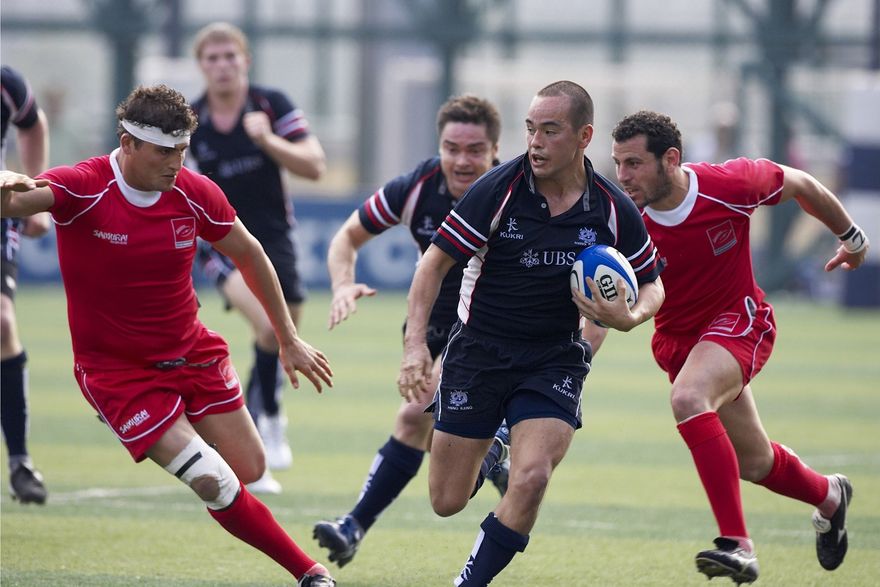
From November, Rees will become the head coach to the national teams of Hong Kong, having been handed a three-year contract by the HKRFU.
A former club and international 'B' player in Wales, Rees' entire rugby coaching career has, until now, been spent in his homeland. Predominantly, he has worked with the country's Age Grade teams - he took charge of both the Under 19 and Under 21 teams at IRB World Champiponships - and also Sevens, where he oversaw the resurgence of the short form of the game in Wales and the country's reintroduction into the IRB Sevens World Series.
For the last four years he has also been assistant coach with the Newport Gwent Dragons, one of the professional franchises in Wales.
"I feel that coaches need to travel, experience new cultures and new challenges and Hong Kong have been kind enough to give me that opportunity and I'm going to take them forward over the next three years. It's a very exciting prospect," Rees told Total Rugby Radio this week.
Rees is not on his own when it comes to dealing in Asian currency. For a long time the continent has been able to lure coaching talent, from pioneering visionaries like George Simpkin to more glamorous appointments such as Waisale Serevi and compatriot Tomasi Cama.
Japan the team to beat
Perhaps the highest profile appointment of them all has been that of former All Black and Italy coach John Kirwan, in Japan.
"Japan are the team to beat, based purely on the fact that they have a full time league and they have a massive southern hemisphere influence from professional players who have finished their time at the top.
"The challenge for us in Hong Kong is to increase the player base, increase the performance levels and maybe one day qualify for that 2015 World Cup."
Rees speaks about Hong Kong and the challenge ahead as if he has lived there and hung his jacket in the union offices every day for five years. He is clearly excited by the prospect of taking his young family to Asia's most vibrant city after Christmas and, of course, knows the place well through his exposure to the IRB Sevens World Series.
He will also be enthused by the fact that work is well underway to create the structures that will take the game forward. Head of High Performance Ivan Torpey and the existing coaching set-up have managed to introduce more Chinese to the game at the top end, as witnessed at the Hong Kong Sevens for the past couple of years, but Rees now faces the challenge of conjuring the best out of the nation's top talent to inspire further take-up, while also aiming to entice oversees players to Hong Kong in the Japanese mould.
Growing the game in Hong Kong
"The game is growing from a tag and touch point of view and more Asian players are participating in the game," he said. "There's a drive and an intent there to increase the playing levels from within, but by looking outside of Hong Kong hopefully we can also make our domestic competition stronger by introducing oversees players, to increase the performance levels."
For a man who has only ever known and witnessed participation at the highest level, both at the club and international scene, it must be difficult to resist short-termism. However, Rees is steadfast in his view that any targets for Hong Kong are fixed beyond the 2011 Rugby World Cup.
"We have first to secure ourselves firmly as a force in the Asian 5 Nations championships. I'd like to think that come May we'll be competing with Korea initially, having lost to them last year, and within two years sniping at Japan's heels in terms of competing at the top end of the championship.
"Another key area will be putting in place support structures for the Under 20s, the Under 18s and Under 14s in their quest to qualify for Junior World Cups and hopefully support the coaches within those environments as well.
"It's got to be a long-term project. Any development structure has to be looked at in terms of three years plus and, while my contract runs up until the next World Cup in 2011, our focus is on the World Cups after that in 2015 and beyond."
Listen to Rees speaking on Total Rugby Radio, on stations worldwide, as a podcast on i-Tunes or on this website from Thursday afternoon UK time.